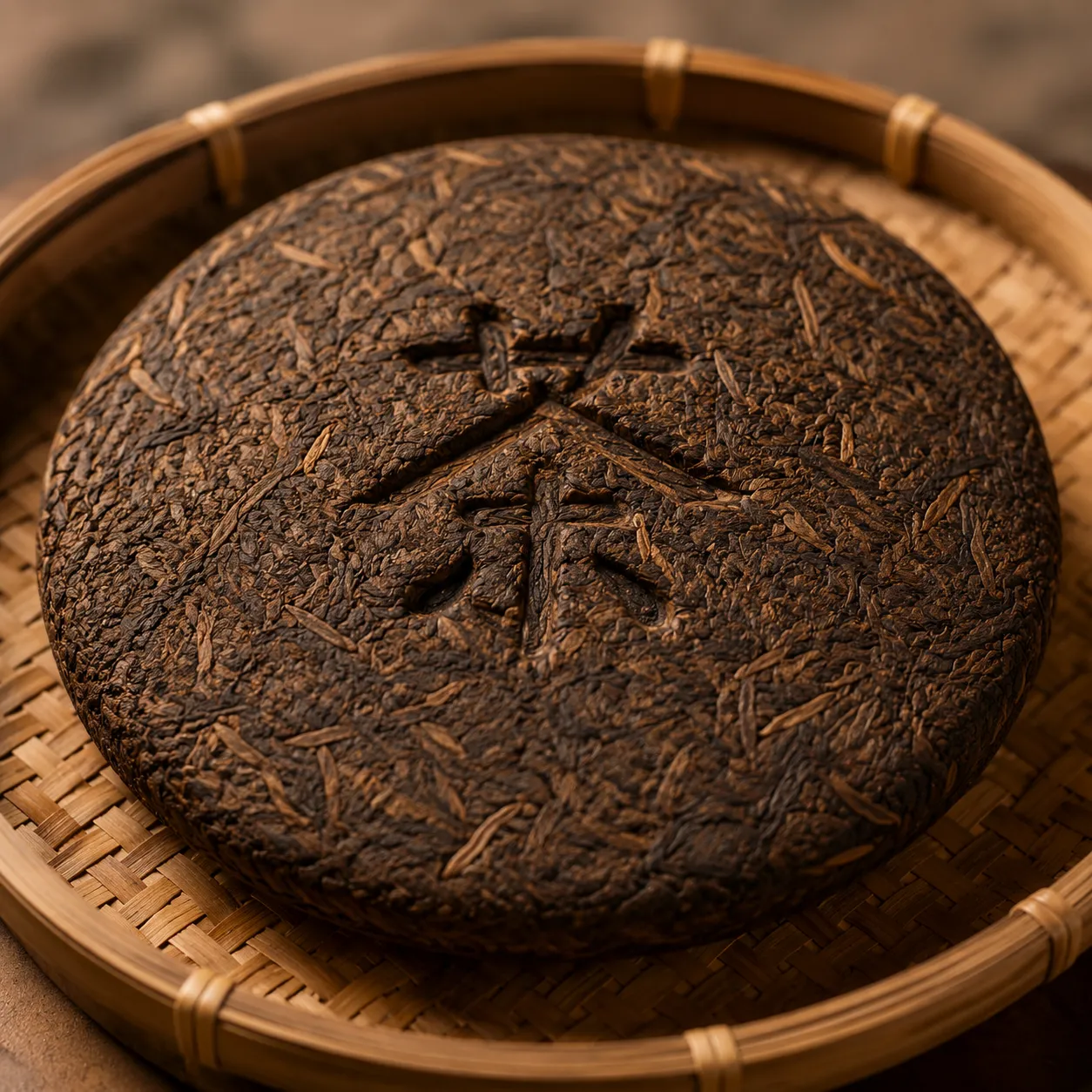
Dark Tea 黑茶 hēi chá
Unlike other teas, dark tea undergoes microbial fermentation after initial processing — similar to composting or aging cheese. Pu-erh is the…
The Defining Process
How Dark Tea Is Made
Microbial fermentation
微生物发酵 — wēishēngwù fājiào — 'microbial fermentation'
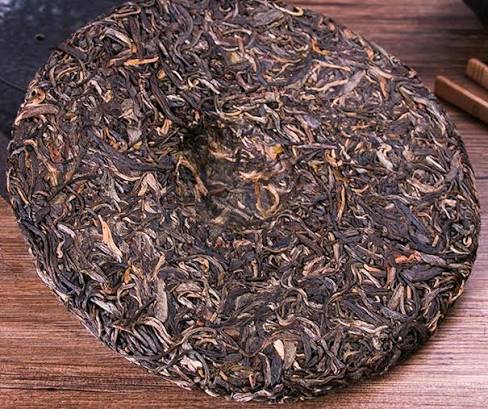
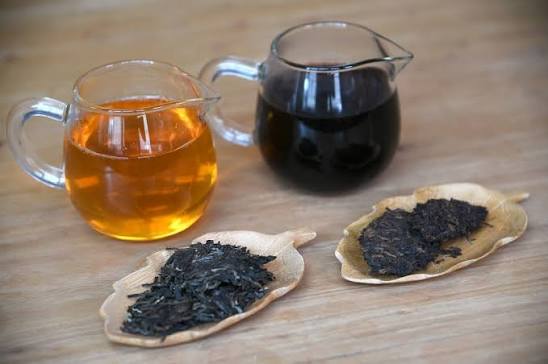
Pu'er is the outlier. Every other tea type is defined by enzymatic oxidation — the browning reaction driven by enzymes within the leaf, the same process that turns a cut apple brown. Pu'er is defined by microbial fermentation: bacteria, fungi, and other microorganisms acting on the leaf over time. It's a fundamentally different chemical process, which is why Pu'er sits in its own category — hei cha (dark tea). Raw Pu'er (sheng, 生) starts as a compressed cake and transforms slowly over years through natural microbial activity; it can age for decades and is traded with vintage values. Ripe Pu'er (shou, 熟), developed in the 1970s, uses a controlled wet-piling fermentation that achieves in months what aging achieves over years.
Oxidation
Post-fermented
Caffeine
Medium-High
Brew Temp
200-212°F
Typical Price
$10-500+ / 357g
Straight Answers
Common Dark Misconceptions
Pu'er is fermented, not oxidized — the difference is microbial activity versus leaf enzymes. It's a fundamentally different chemistry, not just 'really oxidized tea'.
Sheng and shou pu'er taste nothing alike. Shou is the approachable, earthy, smooth entry point; young sheng is bright, astringent, and bitter-sweet.
Aging pu'er requires breathable storage, not an airtight jar — seal it in plastic and it stops aging (and risks molding instead).
The one-liner: Microbially fermented rather than oxidized; earthy and smooth, ages like wine.
2 Famous Dark Teas
Our Dark Tea Guides
Click any tea for its full page — flavor profile, exact brewing parameters, buying tips, and common scams.
Keep Exploring
The Other Five Types
Ready to Drink Better Tea?
From your first cup to your tenth infusions — everything here moves you from curiosity to a better cup.
Related Searches