The Foundation
The Six Types of Chinese Tea: A Complete Guide
Every type of tea comes from one plant. What makes green tea green, black tea black, and oolong something in between is what happens to the leaf after it's picked.
Last updated August 2026 — processing, prices, and brewing parameters re-verified.
All tea — every type, every style, every country of origin — comes from one plant: Camellia sinensis. What makes green tea green, black tea black, and oolong something in between isn't the plant or where it's grown. It's what happens to the leaf after it's picked.
The six Chinese tea types — green, white, yellow, oolong, black, and dark — are defined almost entirely by their processing. Each category is keyed to one defining step: fixing for green, withering for white, sealing the yellow for yellow, edge-bruising for oolong, full oxidation for black, and microbial fermentation for dark tea. Understand that one fact and the whole category map clicks into place.
| Type | Defining step | Chinese term |
|---|---|---|
| Green Tea | Fixing | 杀青 lǜ chá |
| White Tea | Withering | 萎凋 bái chá |
| Yellow Tea | Sealing the yellow | 焖黄 huáng chá |
| Oolong Tea | Rocking the green | 摇青 wūlóng chá |
| Black Tea | Full oxidation | 全发酵 hóng chá |
| Dark Tea | Microbial fermentation | 微生物发酵 hēi chá |
Why they're called the "six colors"
In the traditional Chinese classification, the six types are also called the six colors (六茶六色): green tea 绿茶, white tea 白茶, yellow tea 黄茶, qing cha 青茶 (blue-green — this is oolong, which is why older sources sometimes call oolong "blue tea"), hong cha 红茶 (red tea — what the West calls black tea), and hei cha 黑茶 (dark tea, the fermented category that includes pu-erh).
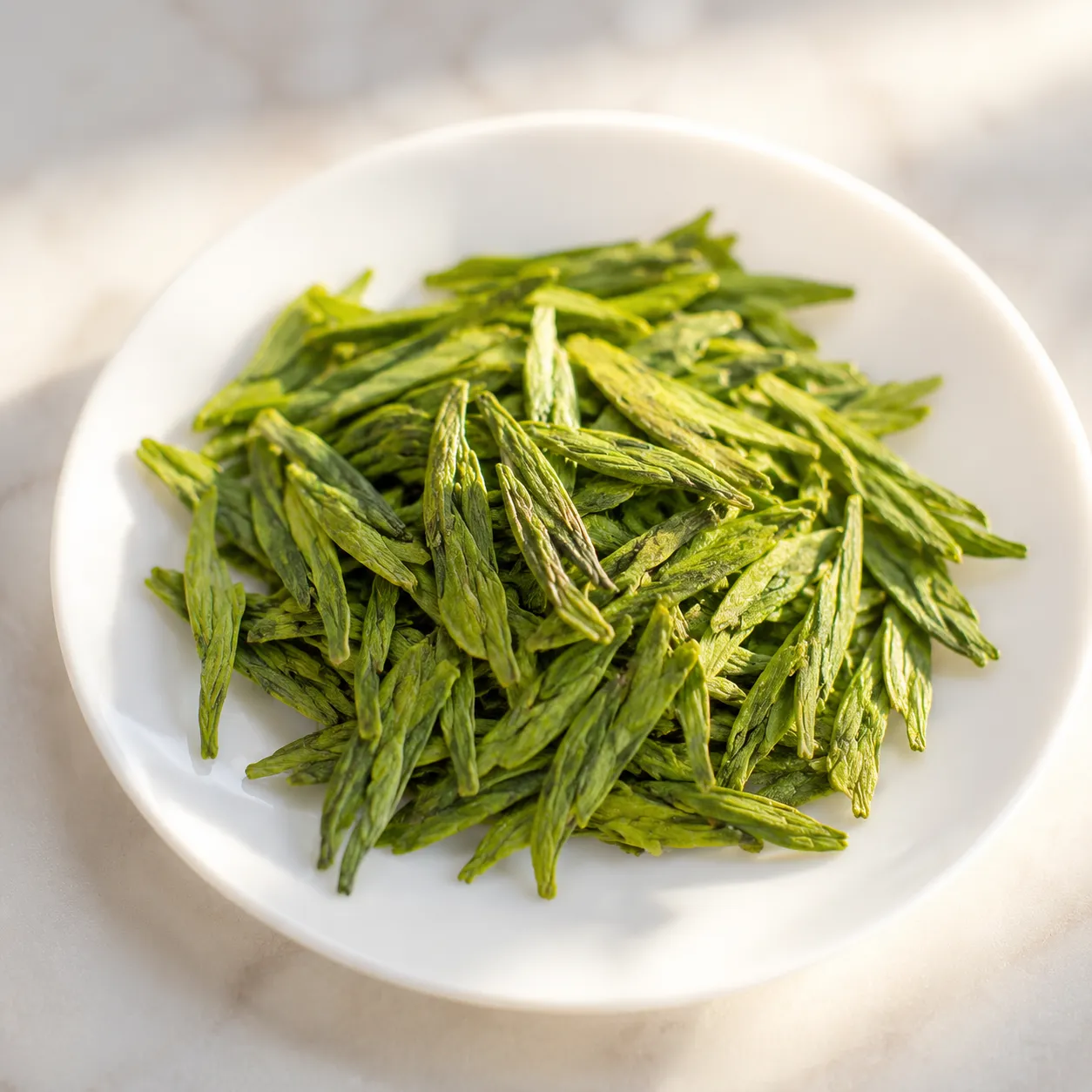 Green
GreenGreen Tea 绿茶
0% (unoxidized)
Fixed early; pan-fired Chinese styles are toasted and nutty, steamed Japanese styles are vegetal.
$5-40 / 100g
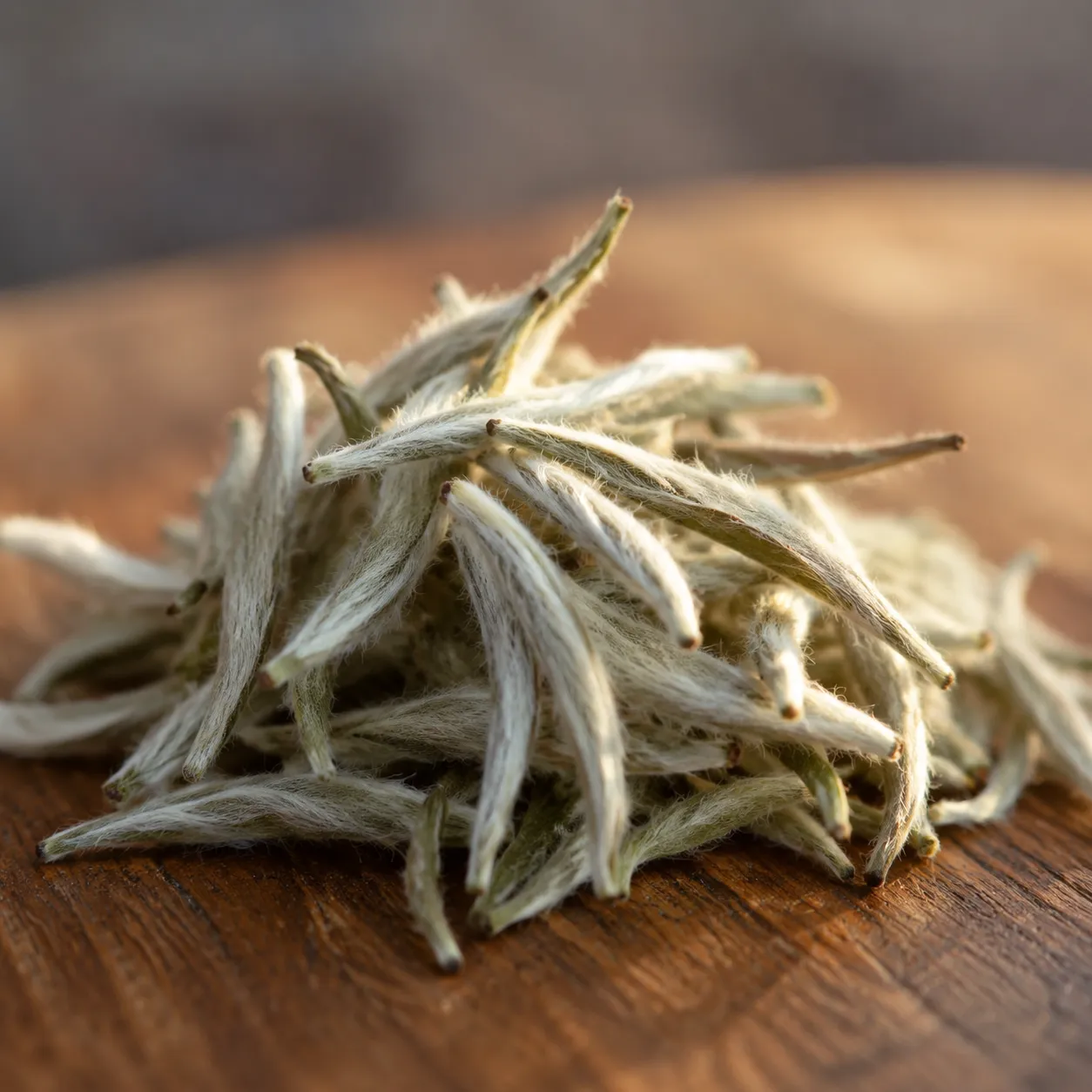 White
WhiteWhite Tea 白茶
0% (unoxidized)
Withered and dried; minimal natural oxidation produces honey, hay, and subtle fruit.
$10-60 / 100g
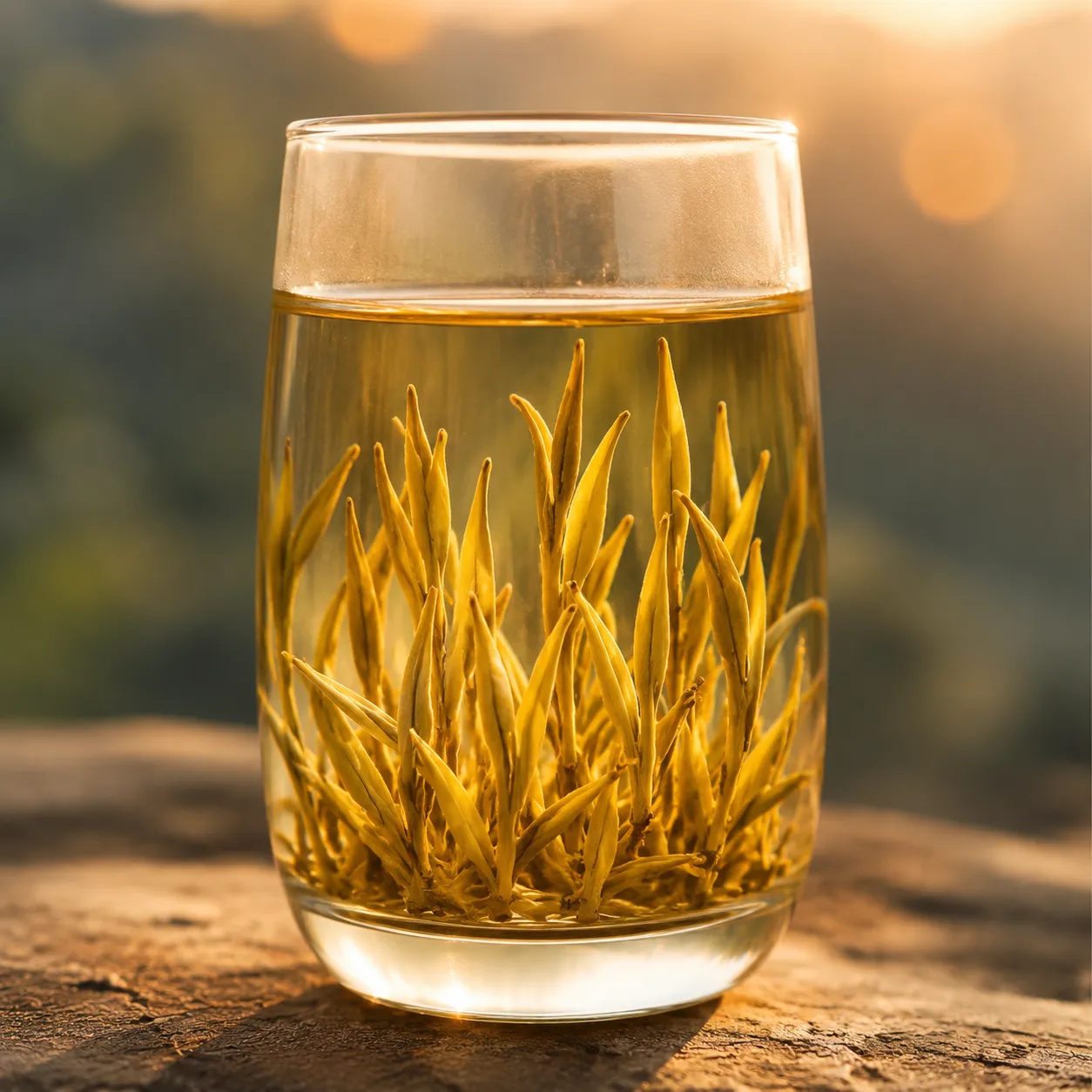 Yellow
Yellow Tea 黄茶
5-10% (lightly oxidized)
Green processing plus men huang wrapping; mellower and rounder than green, rarely made correctly anymore.
$15-80 / 100g
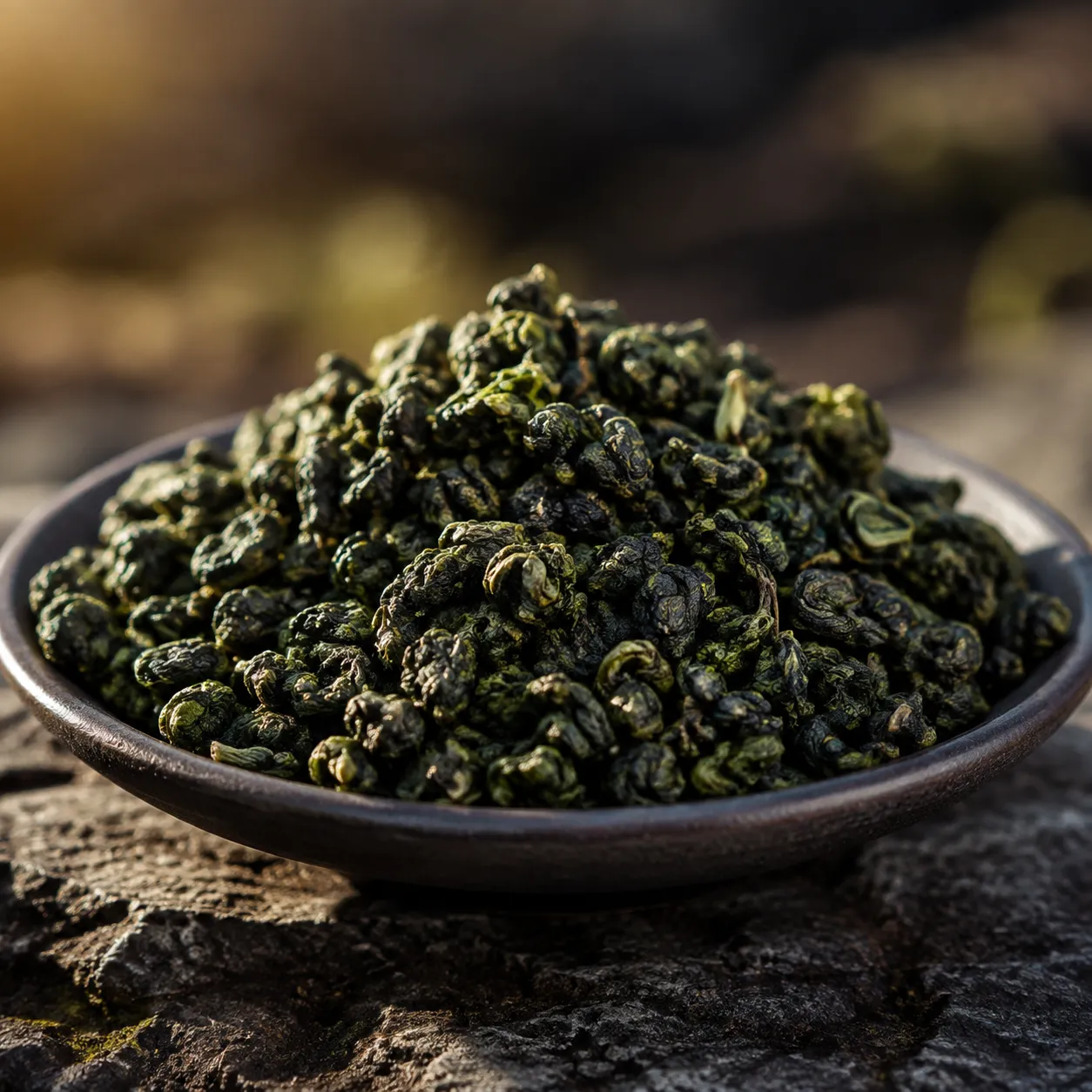 Oolong
Oolong Tea 乌龙茶
10-70% (partially oxidized)
Semi-oxidized via edge-bruising; the widest category, from nearly green to nearly black.
$8-200+ / 100g
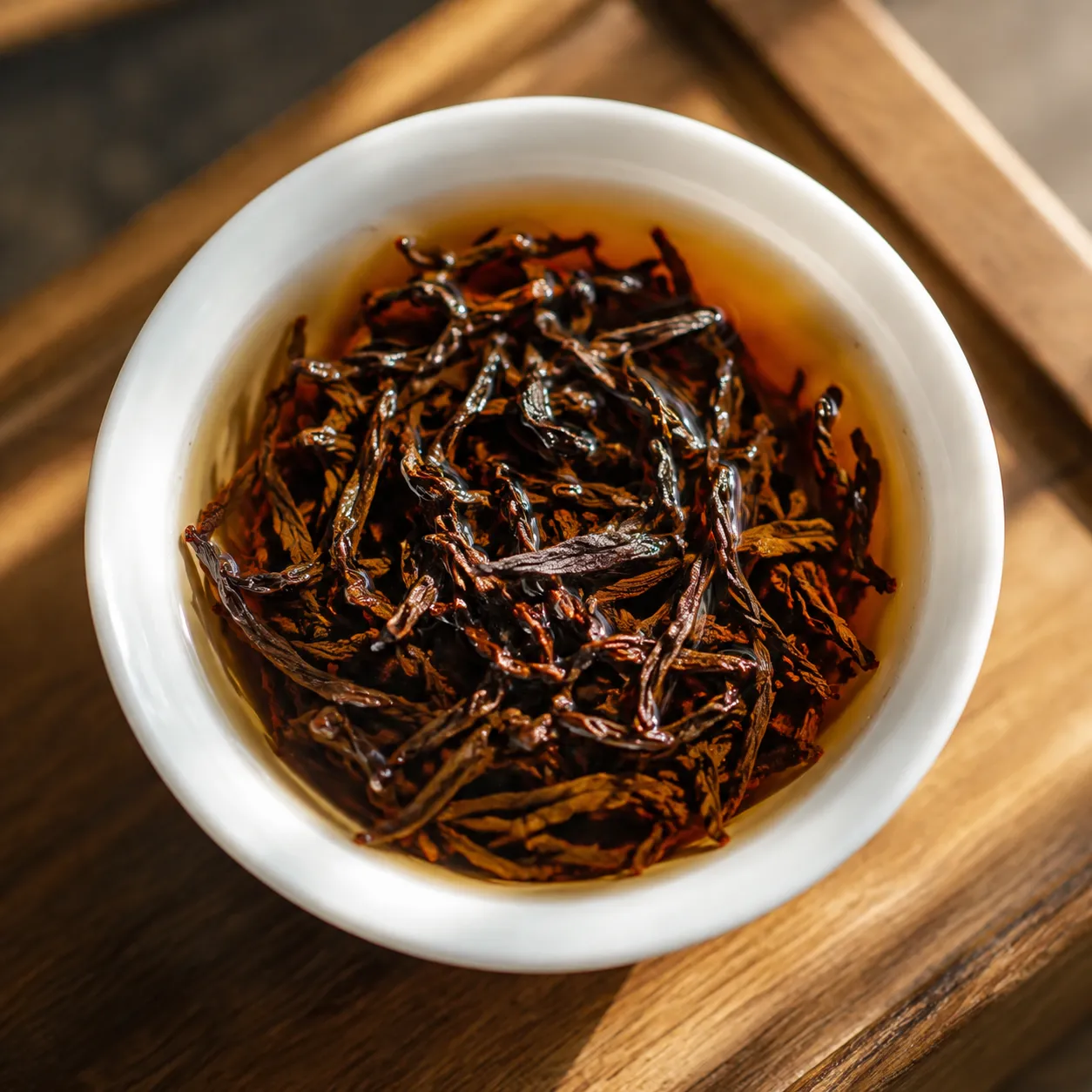 Black
BlackBlack Tea 红茶
100% (fully oxidized)
Fully oxidized; brisk and stable, with distinct regional character in whole-leaf Chinese versions.
$8-50 / 100g
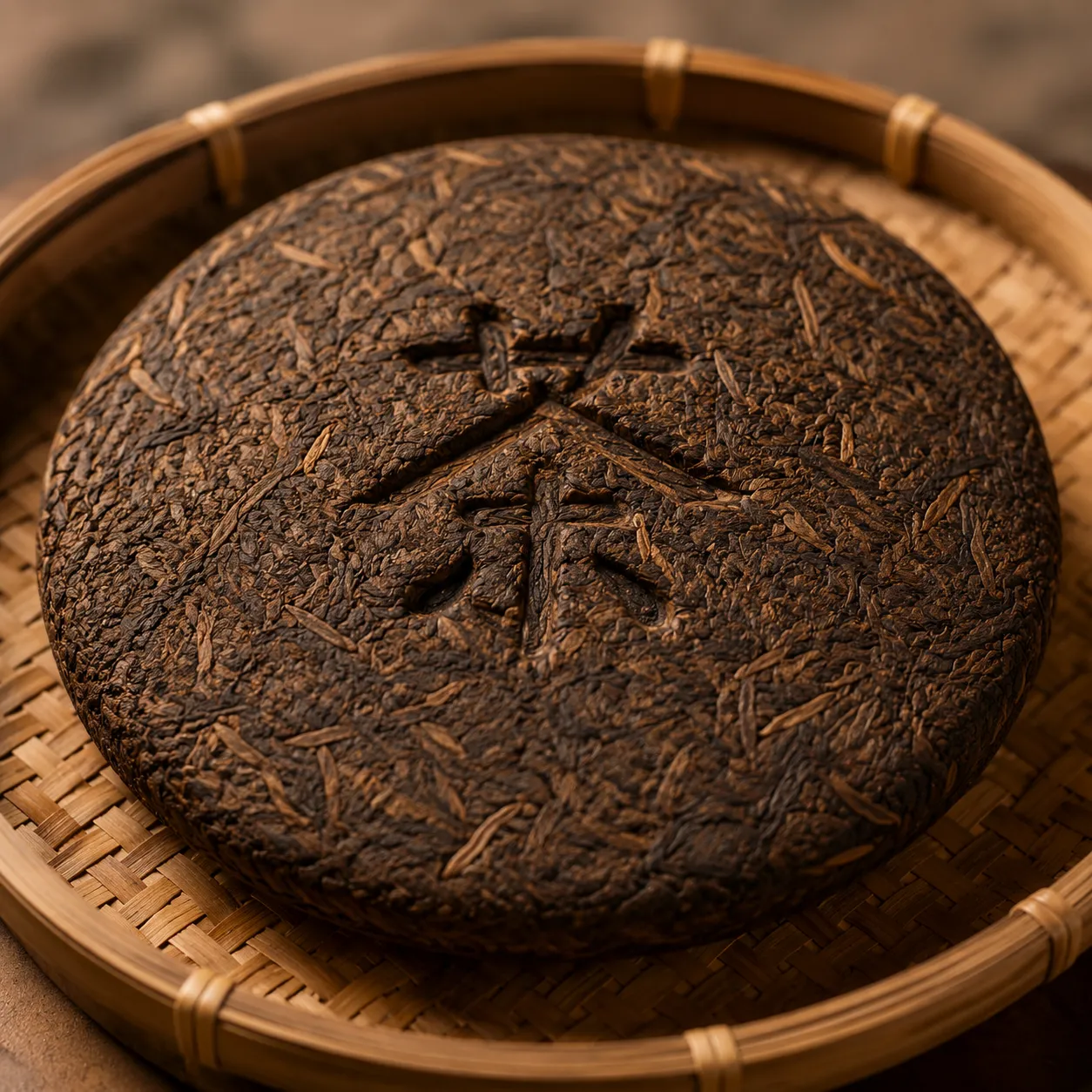 Dark
DarkDark Tea 黑茶
Post-fermented
Microbially fermented rather than oxidized; earthy and smooth, ages like wine.
$10-500+ / 357g
At a Glance
Compare the Six Types
| Type | Oxidation | Caffeine | Brew Temp | Beginner | Price Range |
|---|---|---|---|---|---|
| Green | 0% (unoxidized) | Medium | 160-175°F | ★★★★★ | $5-40 / 100g |
| White | 0% (unoxidized) | Low | 175-185°F | ★★★★★ | $10-60 / 100g |
| Yellow | 5-10% (lightly oxidized) | Low | 175-185°F | ★★★★☆ | $15-80 / 100g |
| Oolong | 10-70% (partially oxidized) | Low-Medium | 185-205°F | ★★★★☆ | $8-200+ / 100g |
| Black | 100% (fully oxidized) | Medium | 195-212°F | ★★★★★ | $8-50 / 100g |
| Dark | Post-fermented | Medium-High | 200-212°F | ★★★★☆ | $10-500+ / 357g |
Recap
One Line for Each Type
If you remember nothing else from this guide, remember these six sentences.
Fixed early; pan-fired Chinese styles are toasted and nutty, steamed Japanese styles are vegetal.
Withered and dried; minimal natural oxidation produces honey, hay, and subtle fruit.
Green processing plus men huang wrapping; mellower and rounder than green, rarely made correctly anymore.
Semi-oxidized via edge-bruising; the widest category, from nearly green to nearly black.
Fully oxidized; brisk and stable, with distinct regional character in whole-leaf Chinese versions.
Microbially fermented rather than oxidized; earthy and smooth, ages like wine.
Straight Answers
Common Misconceptions, Corrected
The same wrong ideas show up in every comment section. Here's the accurate version of each.
Green tea isn't green by accident — it is deliberately killed-green within hours of picking. Skip the fix and the same leaf keeps oxidizing into black tea.
Boiling water destroys green tea. The delicate leaves want 160-175°F, not 212°F — a kettle that holds temperature matters more than the leaf grade for the first few brews.
Green tea is the most time-sensitive type in the whole category — it's fresh produce, not a pantry staple. Drink within 6-12 months of harvest.
White tea isn't truly unoxidized — gentle, unintentional oxidation during the long wither is exactly what creates its honey and hay notes.
White tea isn't always buds only. Silver Needle is — one unopened bud per pick — but White Peony uses one bud with one or two young leaves, which gives it more substance and makes it a better everyday tea.
White tea ages, which almost no other delicate tea does — because the enzymes were never killed, the leaf keeps slowly transforming for years.
Most 'yellow tea' sold today skipped the men huang step and is really green tea in disguise — genuine yellow tea is genuinely rare.
Yellow tea isn't a green tea variety — the extra wrapping-and-stewing step is a real, separate category with its own softer, honeyed character.
A 'yellow tea' that tastes identical to a green tea probably never underwent the defining step — the telltale sign is the mellow, almost buttery roundness.
Oolong isn't one flavor — it spans roughly 10-85% oxidation, from floral, nearly-green jade oolong to deeply roasted Da Hong Pao.
The charcoal roast of Wuyi rock teas is a step beyond oxidation — it's what creates yan yun (岩韵, 'rock rhyme'), the mineral depth of the mountain.
Oolong's official color-category name is qing cha (青茶, 'blue-green tea') — in the six-color classification it's the 'blue' in the lineup, which is why some older translations call oolong 'blue tea'.
Ball-rolled oolongs aren't broken or poor quality — the tight pellets are how the tea is shaped, and they unfurl dramatically across 5-8+ infusions.
Chinese 'black tea' is hong cha (红茶, 'red tea') — named for the red liquor, not the leaf. The Chinese 'dark tea' category (hei cha) is the fermented one, which is where Pu'er belongs.
Black tea and red tea are the same tea — the confusion is purely a translation artifact of naming the category after the liquor color.
Chinese black teas aren't the aggressive, tannic brews you may know from bags — whole-leaf congou styles are smooth and need no milk.
Pu'er is fermented, not oxidized — the difference is microbial activity versus leaf enzymes. It's a fundamentally different chemistry, not just 'really oxidized tea'.
Sheng and shou pu'er taste nothing alike. Shou is the approachable, earthy, smooth entry point; young sheng is bright, astringent, and bitter-sweet.
Aging pu'er requires breathable storage, not an airtight jar — seal it in plastic and it stops aging (and risks molding instead).
Boundary
What's Not One of the Six
The six categories cover only tea-leaf tea — every one of them comes from Camellia sinensis.
Flower & herbal infusions are not tea
Chamomile, peppermint, rooibos, and chrysanthemum 'teas' are infusions of other plants — no Camellia sinensis leaf, no caffeine, and they follow none of the six processing paths. The Chinese tea tradition focuses on the craft of transforming a single kind of leaf.
Jasmine tea is the one exception
Jasmine tea (hua cha, 花茶) is real tea — tea leaves scented with fresh jasmine blossoms over several nights. It's a flavoring step applied to an already-made green or white tea, which is why it isn't one of the six types even though it's genuinely tea.
Further reading
The processing framework used here — defining each type by its one decisive step — draws on the classification work of Tony Gebely, author of Tea: A User's Guide and the Tea Epicure blog. If you want to go deeper into how tea is made, his work is the clearest thinking on the subject.
Ready to Drink Better Tea?
From your first cup to your tenth infusions — everything here moves you from curiosity to a better cup.